
The best AI consulting services help a business identify practical AI use cases, reduce risk, improve workflows, and connect AI investments to measurable business results.
To evaluate an AI consultant, look for five things: business understanding, process knowledge, clear recommendations, measurable outcomes, and a realistic implementation plan.
If you are comparing providers, this guide explains what AI consulting should include, what questions to ask, what red flags to watch for, and how to make the right choice.
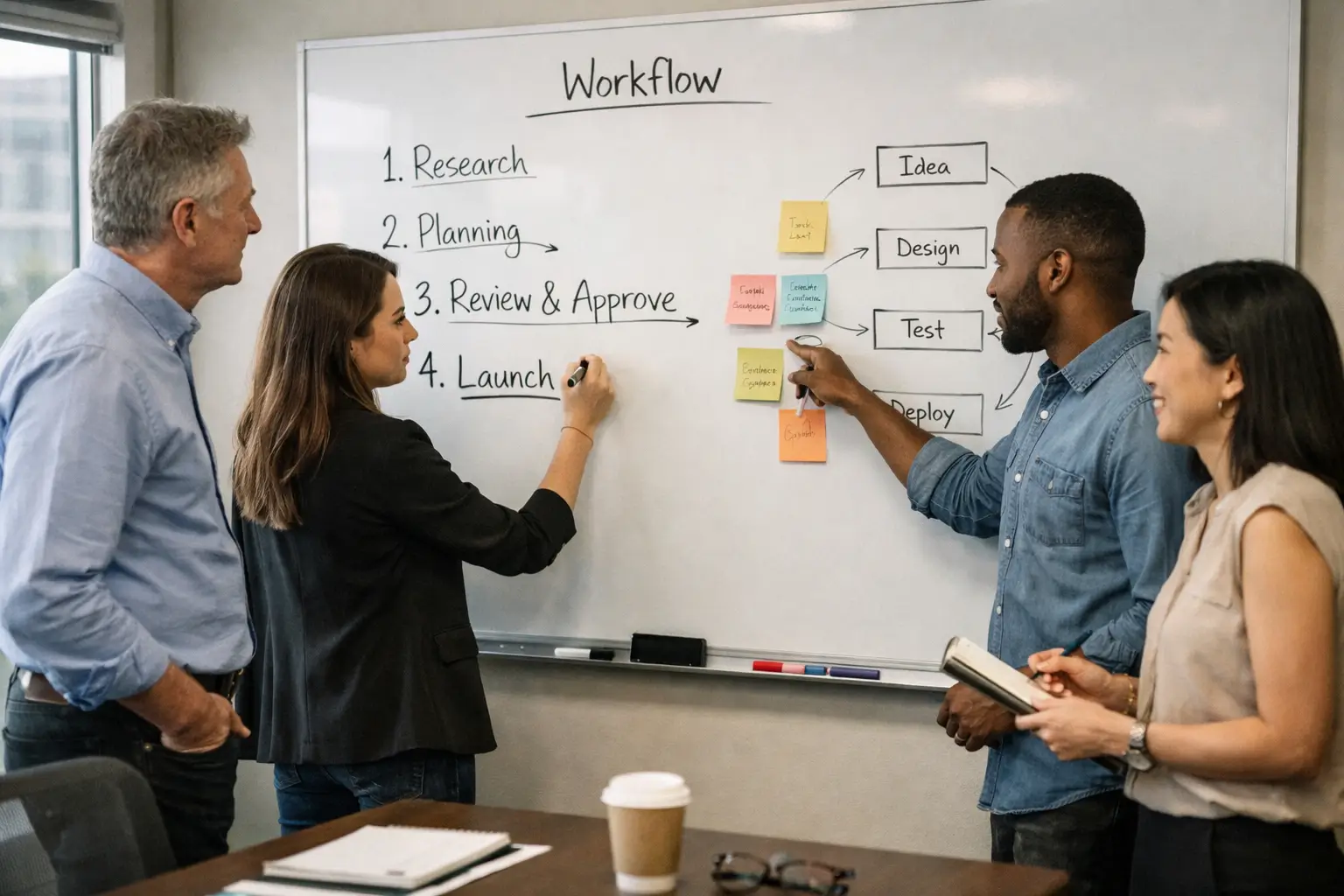
What Is AI Consulting?
AI consulting is the process of helping a business identify, plan, and implement artificial intelligence in ways that improve operations, decision-making, customer experience, or efficiency.
A strong AI consultant should help you:
- find practical use cases
- review workflows and systems
- identify risks and constraints
- prioritize opportunities by business impact
- create a realistic roadmap for implementation
For a broader explanation of business use cases, read how can AI help my business.

How to Choose the Right AI Consultant
To choose the right AI consultant, look for someone who understands your business first, not just the technology.
- Start with business goals. The consultant should ask what you want to improve, reduce, automate, or measure.
- Look for workflow awareness. They should understand how work moves through your business today.
- Ask for practical examples. They should be able to describe real use cases, realistic outcomes, and implementation steps.
- Require measurable success criteria. They should define what success looks like before any build starts.
- Evaluate communication. They should explain AI clearly, without hiding behind jargon.

What Should AI Consulting Services Include?
The best AI consulting services usually include assessment, strategy, implementation planning, governance guidance, and performance measurement.
1. Assessment
The consultant reviews your current workflows, tools, systems, data, and bottlenecks.
2. Strategy
The consultant identifies the best use cases, prioritizes them, and connects them to business goals.
3. Implementation Planning
The consultant outlines how solutions will be deployed, integrated, tested, and adopted by your team.
4. Governance and Risk Review
The consultant addresses privacy, security, accuracy, oversight, and responsible use.
5. Measurement
The consultant defines KPIs, expected outcomes, and how results will be tracked over time.
For a practical framework, see how to build an AI framework for your business.

What Makes a Good AI Consultant?
A good AI consultant understands both business operations and AI capabilities, then translates that into practical recommendations.
Strong signs include:
- they ask detailed questions about your business
- they focus on outcomes before tools
- they explain tradeoffs clearly
- they talk about risk as well as opportunity
- they recommend a roadmap instead of random experiments

Red Flags When Hiring an AI Consultant
You should be cautious if an AI consultant pushes software before understanding your business or promises fast transformation without a clear plan.
Common red flags include:
- tool-first recommendations
- vague promises about transformation
- no discussion of ROI or KPIs
- no mention of governance, accuracy, or risk
- no implementation process
- heavy jargon and weak explanations
For a broader business lens, review how to evaluate technology investments without chasing trends.

Questions to Ask Before Hiring an AI Consultant
Before hiring an AI consultant, ask direct questions that reveal how they think, how they work, and how they measure success.
- How do you identify the best AI opportunities in a business like mine?
- What does your assessment process include?
- How do you prioritize use cases?
- How do you measure ROI or business value?
- How do you handle risk, governance, and accuracy?
- What does implementation look like in the first 90 days?
- How do you support integration with existing systems?
- What results have you helped other businesses achieve?

Why AI Strategy Matters More Than Tools
AI strategy matters more than tools because a business gets value from the right use case, process fit, and implementation plan, not from software alone.
Without strategy, businesses often end up with disconnected tools, low adoption, weak data inputs, and no measurable return.
According to the NIST AI Risk Management Framework, trustworthy AI requires deliberate attention to governance, validity, reliability, accountability, transparency, privacy, and security.
The FTC also warns businesses to keep AI claims accurate and supported.
For small businesses, the U.S. Small Business Administration recommends practical technology adoption tied to business needs.
McKinsey & Company also publishes research on aligning AI efforts with business goals and operational value.

How to Evaluate AI Consulting Services for ROI
To evaluate AI consulting services for ROI, focus on measurable business improvements rather than general innovation claims.
Look for expected impact in areas like:
- time saved
- faster response times
- reduced manual work
- better reporting or decision quality
- improved customer experience
- higher consistency across processes
- cost reduction or margin improvement

Best AI Consulting Services for Small Business
The best AI consulting services for small businesses are practical, focused, and aligned with real operational needs.
Small businesses usually benefit most when consulting starts with:
- one clear business problem
- one or two high-impact use cases
- a simple implementation roadmap
- basic governance and review controls
- clear before-and-after measurements

People Also Ask
What does an AI consultant actually do?
An AI consultant reviews your business processes, identifies practical AI opportunities, recommends solutions, and helps plan or implement them in a way that supports measurable business goals.
How do I evaluate AI consulting services?
Evaluate AI consulting services by reviewing business understanding, use case prioritization, implementation planning, risk awareness, communication clarity, and the ability to define measurable outcomes.
What should I look for in an AI consultant?
You should look for someone who understands your operations, asks detailed questions, communicates clearly, and recommends a realistic roadmap instead of pushing tools too early.
Is AI consulting worth it for small businesses?
AI consulting can be worth it for small businesses when it focuses on specific operational problems, measurable gains, and practical implementation rather than broad experimentation.
How much do AI consulting services cost?
AI consulting costs vary by scope, but many engagements begin with an assessment or strategy phase before moving into implementation, integration, or ongoing advisory support.

Final Thought
The right AI consultant will help you make better business decisions about AI, not just introduce more technology.
If a consultant can connect AI to your operations, priorities, and measurable outcomes, you are much more likely to see real value from the engagement.