
Technology trends move fast.
Every week, there is a new platform, new AI tool, or new automation promise. Vendors claim a competitive advantage. Competitors announce adoption. Headlines create urgency.
As a business leader, you are expected to respond.
But reacting to hype is not a strategy. It’s pressure.
If you want to know how to evaluate new technology for your business without wasting capital, you must treat technology as a lever in your business. Not as a solution in itself.
When I work with clients, I focus on disciplined decision-making. The goal is simple. Protect capital. Improve operational clarity. Build long-term capability.
Technology should follow strategy. It should never replace it.

Why Trend Driven Buying Leads to Waste
Fear drives many purchases.
Fear of falling behind. Fear of losing market share. Fear of missing out on AI.
But software rarely fixes an unclear strategy.
When companies skip evaluation and move straight to purchase, they often face shelfware, low adoption, overlapping tools, and integration conflicts. Data becomes fragmented. Teams build workarounds. Reporting becomes inconsistent.
If you are evaluating software before purchase, ask yourself this first. Is the underlying business process defined and documented?
If not, the technology will amplify confusion.

The Five Question Decision Filter
A Practical Technology Investment Decision Framework
If you want a technology investment checklist for executives, start here.
Before approving any new platform, I recommend asking these five disciplined questions:
- What defined business constraint does this solve?
If you cannot name the bottleneck, the purchase is premature. - How does it improve margin, speed, or quality in measurable terms?
If the impact cannot be quantified, ROI assumptions are weak. - Is our data structured and reliable enough to support this system?
This is critical when evaluating AI tools for business. AI depends on data quality. - Does the team have the capacity to adopt it?
Even the best enterprise software fails without behavioral change. - Is governance in place to manage risk, ensure compliance, and oversee operations?
This becomes especially important when considering responsible AI investment planning and AI governance checklists for executives.

Capital Expense vs Operational Efficiency
Building a Real Business Case for AI Implementation
Every technology investment falls into one of two categories.
It either reduces cost or increases capability.
Both are valid. But they must be modeled realistically.
When evaluating AI investments, I often see projected ROI based on vendor case studies. Those projections rarely reflect your team, your data maturity, or your workflows.
If you are building a business case for AI implementation, model three scenarios. Conservative, realistic, and aggressive. Use internal labor costs and current process baselines.

Process Readiness Before Software Selection
How to Avoid Chasing Technology Trends
If you want to avoid chasing technology trends, improve the clarity of your workflow first.
Map one core process. For example, client onboarding.
Document each step. Identify delays. Measure cycle time. Quantify rework.
Now ask whether technology solves a defined friction point.
This approach supports any technology due diligence process. It prevents tool-first thinking.
When I advise clients, I insist that process clarity comes before product demos.
Integration Impact and Total Cost of Ownership
How to Choose Enterprise Software with Discipline
The purchase price is rarely the true cost.
When deciding on enterprise software, calculate the total cost of ownership over three years. Include licensing, implementation, integration, training, data migration, and ongoing support.
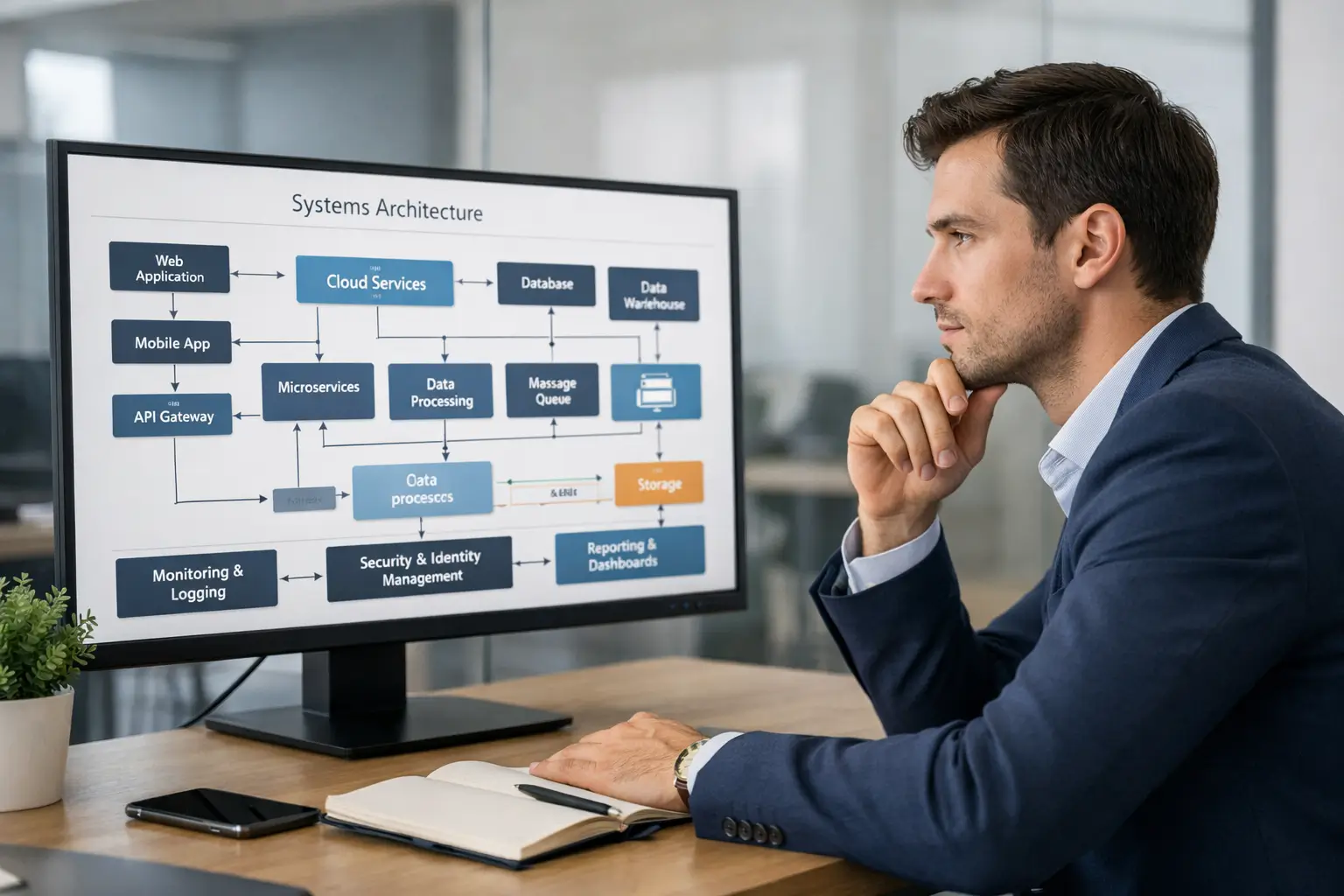
Also measure integration impact. Does the system connect natively to your CRM, accounting, and reporting tools? Or will your team export and reconcile data manually?
Hidden friction erodes ROI quietly.
If you are performing technology due diligence, require vendors to document integration architecture and security practices in writing.

AI Investment Strategy for Small Business
When to Invest in AI for Your Business
Many leaders ask me how to decide if AI is right for their company.
The answer depends on readiness.
An AI readiness assessment for business should evaluate data quality, process maturity, leadership alignment, and governance capacity.
The NIST AI Risk Management Framework provides a strong foundation for responsible governance planning.
If those are weak, start there.
AI amplifies what already exists. It does not repair structural gaps.
If readiness is strong, AI can accelerate analysis, automate repetitive work, and improve decision speed.

Creating a Repeatable Technology Evaluation Practice
Thoughtful evaluation is not a one-time event.
It is a leadership discipline.
Document your technology investment decision framework. Standardize ROI assumptions. Formalize governance checkpoints. Define measurable adoption metrics.
When this becomes repeatable, you reduce fragmentation. You protect capital. You build sustainable modernization.
This is how you evaluate AI investments responsibly. This is how you evaluate software before purchase without emotion.
Technology is not about buying tools.
It is about building capability that compounds over time.
If you want structured guidance, this is the work I do at Blaser Consulting. I help leaders align technology with strategy, process, and long-term growth.
Common Questions
How do I evaluate new technology for my business objectively?
What is a technology investment checklist for executives?
How do you measure ROI on AI investments?
Compare baseline labor costs, error rates, and cycle times against projected improvements. Use conservative assumptions. Track adoption and productivity monthly.
When should a small business invest in AI?
When workflows are documented, data is reliable, and leadership understands the operational objective. AI should solve a well-defined constraint, not serve as an experiment.