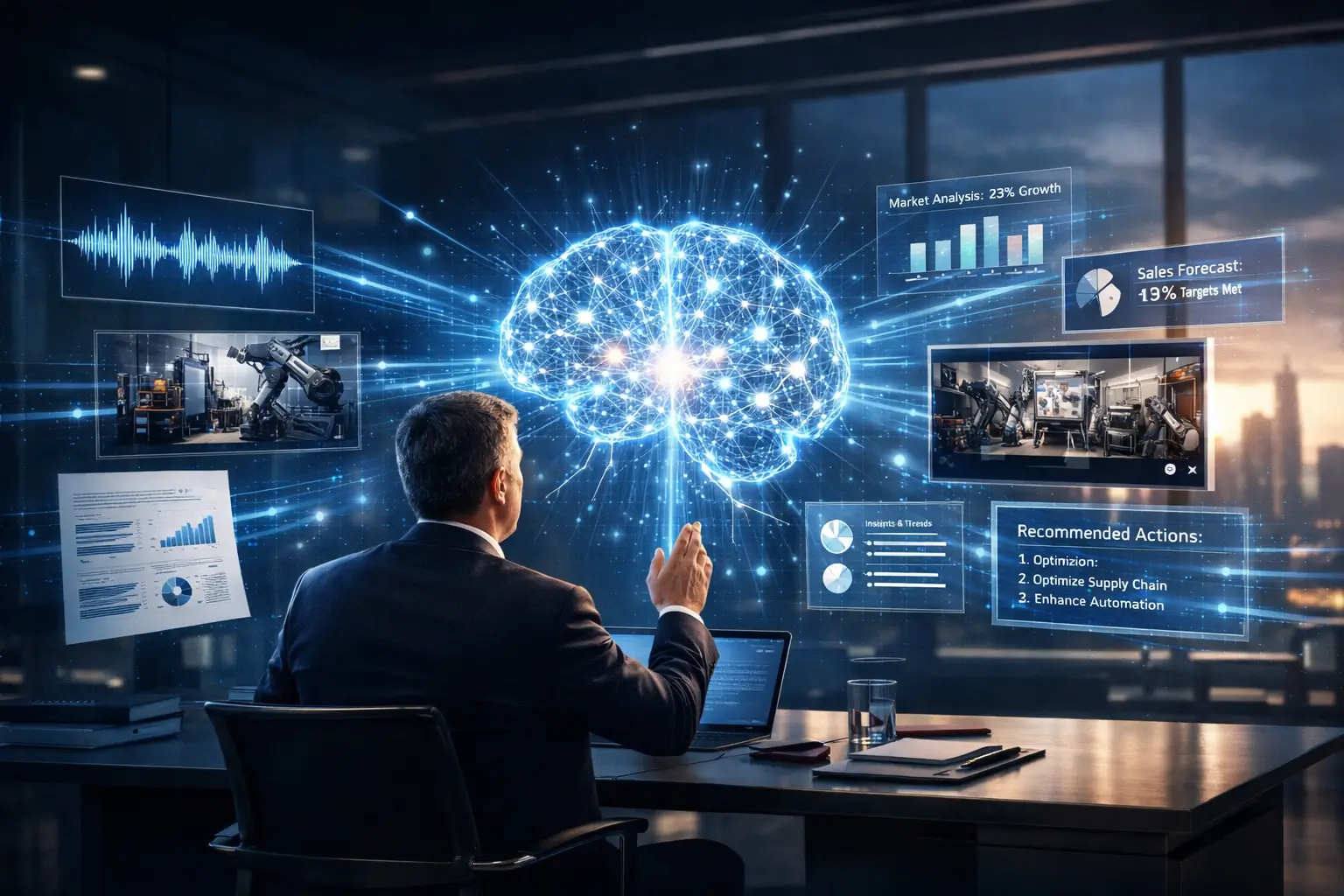
Have you noticed how quickly AI tools are changing the way we interact with technology?
Just a few years ago, most AI systems worked through text prompts. You typed a request, and the system returned text. Today, that model is quickly disappearing.
Modern AI systems can understand images, audio, video, documents, and code simultaneously. This shift is called multimodal AI, and it is changing how people interact with software.
If you run a business, this shift matters more than you might think. Multimodal AI will influence how employees work, how customers interact with technology, and how companies build digital products.
Let me show you what is happening and why it matters.
What Is Multimodal AI
Multimodal AI refers to artificial intelligence systems that can understand and generate multiple types of input and output.
Instead of only processing text, these systems can interpret combinations of:
- Text
- Images
- Audio
- Video
- Documents
- Code
That means a person could upload a photo, ask a question, attach a spreadsheet, and ask the system to analyze everything together.
The AI processes all those inputs as a single request.
A Simple Example
Imagine you take a picture of a damaged machine part and upload it to an AI system.
You ask a question such as:
What is wrong with this part, and how much would it cost to replace it?
The AI examines the image, identifies the component, checks documentation, and generates a response.
That entire interaction combines visual analysis and language reasoning.
This is the essence of multimodal AI.
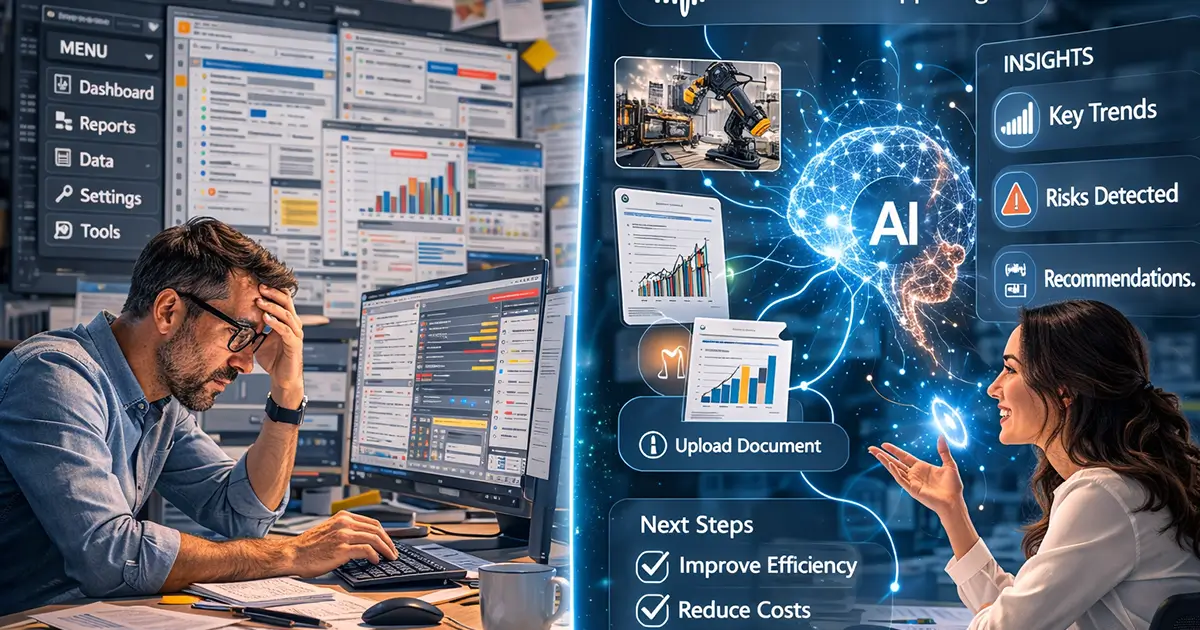
Why Multimodal AI Changes the Way People Use Technology
For decades, software required people to learn structured interfaces.
- Menus
- Forms
- Buttons
- Navigation systems
Users had to adapt to the software.
Multimodal AI flips that model.
Now, software adapts to humans.
People can interact with systems using natural inputs such as:
- Speaking a request
- Uploading a document
- Sharing an image
- Recording a video
- Asking a question in plain language
The system interprets the request and performs the task.
This change removes friction that has existed in software for decades.
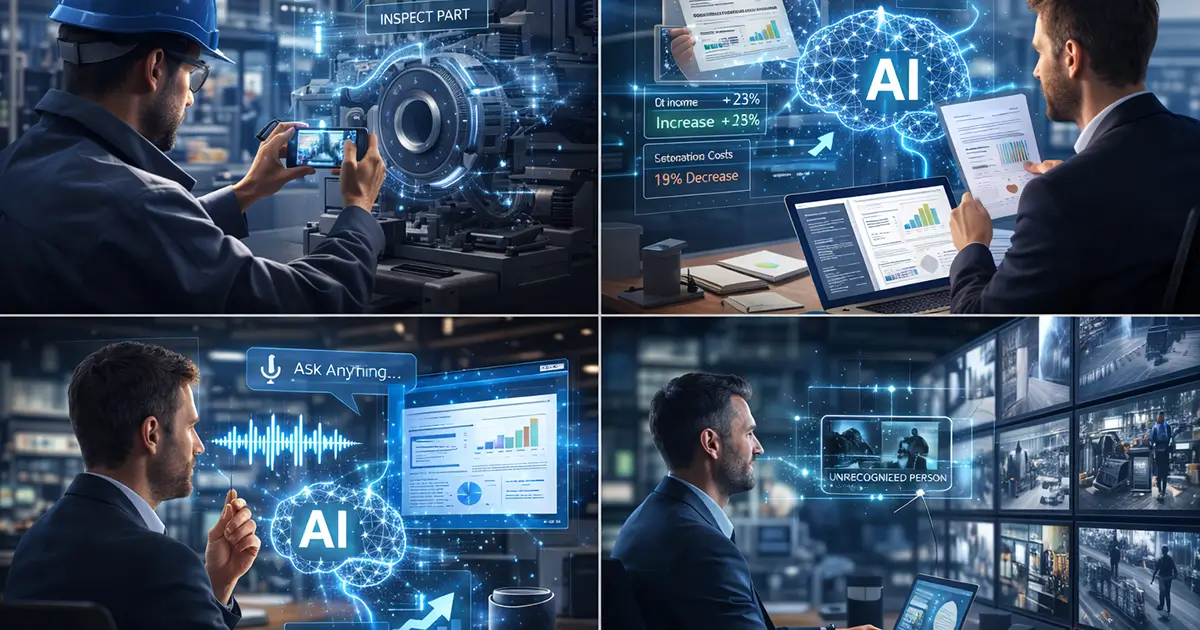
Multimodal AI Is Already Appearing Everywhere
This is not a future concept. It is already happening.
Many of the newest AI systems can process multiple forms of information simultaneously.
Image Understanding
A user uploads a photo and asks the system to explain what it shows.
Businesses are using this for:
- product identification
- equipment diagnostics
- visual quality inspection
Document Analysis
AI systems can read reports, contracts, or spreadsheets and answer questions about them.
A manager might upload a financial document and ask:
What are the biggest expense increases in this report?
The AI reviews the document and provides insights.
Voice Interaction
Voice interaction with AI is becoming increasingly natural.
Instead of typing prompts, users simply talk to the system and receive spoken responses.
This creates a much more natural experience.
Video and Audio Analysis
Some AI systems can now analyze video footage and identify events, objects, or behaviors.
This capability is already being tested in security systems, manufacturing environments, and media analysis tools.
Why Multimodal AI Is Becoming the Default Interface
Human Communication Is Multimodal
People do not communicate only through text.
We combine speech, images, gestures, and documents.
Technology is finally catching up to how humans naturally communicate.
AI Models Are Now Powerful Enough
Recent advances in large AI models allow systems to interpret many forms of information at once.
Research labs and technology companies have invested billions into building these models.
As a result, their capabilities are improving rapidly.
Businesses Want Simpler Interfaces
Traditional software often requires training and complex workflows.
Multimodal AI dramatically simplifies many tasks.
Instead of learning a system, users describe what they want.
The AI handles the process.
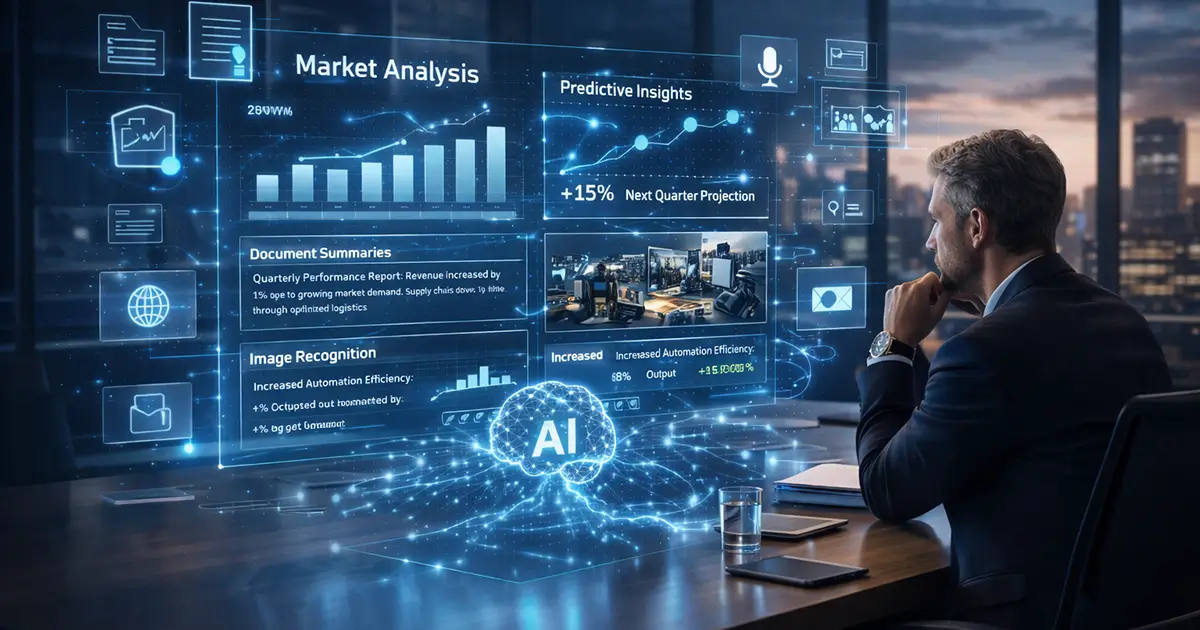
What This Means for Business Leaders
Many business leaders assume AI adoption means installing a chatbot or adding automation to a few workflows.
The reality is much larger.
Multimodal AI is changing how people interact with technology across entire organizations.
Employees Will Work Differently
Workers will increasingly interact with software through conversation and visual inputs.
Instead of navigating complex systems, they will simply ask questions and upload information.
Software Interfaces Will Change
Many traditional dashboards and form-based interfaces will gradually disappear.
They will be replaced by AI-driven interaction layers.
Customer Experiences Will Evolve
Customers will expect to interact with businesses through voice, images, and conversational interfaces.
Companies that adopt these tools early will create smoother customer experiences.
Need Help Applying This To Your Business
Many organizations understand the potential of AI but struggle to determine where to begin.
The most effective approach is to start with a clear evaluation of workflows, data sources, and operational challenges. From there you can identify areas where AI could simplify processes or improve decision making.
I help organizations assess their current systems, identify practical AI opportunities, and plan responsible implementation strategies. If you want help evaluating where multimodal AI could create value in your business, feel free to reach out.
People Also Ask
What is multimodal AI
Why is multimodal AI important
What are examples of multimodal AI
How do businesses use multimodal AI
Will multimodal AI replace traditional software interfaces
How soon will multimodal AI become common in business software
Do companies need specialized infrastructure for multimodal AI
Is multimodal AI expensive to implement
What industries benefit most from multimodal AI
Conclusion
Multimodal AI represents one of the most important shifts in how people interact with technology.
Instead of forcing users to adapt to software, modern systems are adapting to the way humans naturally communicate.
For businesses, this means the interface of the future will not be menus and forms. It will be conversation, images, documents, and voice working together.
Organizations that begin preparing for this change today will be far better positioned as AI-driven software becomes the standard way people work.